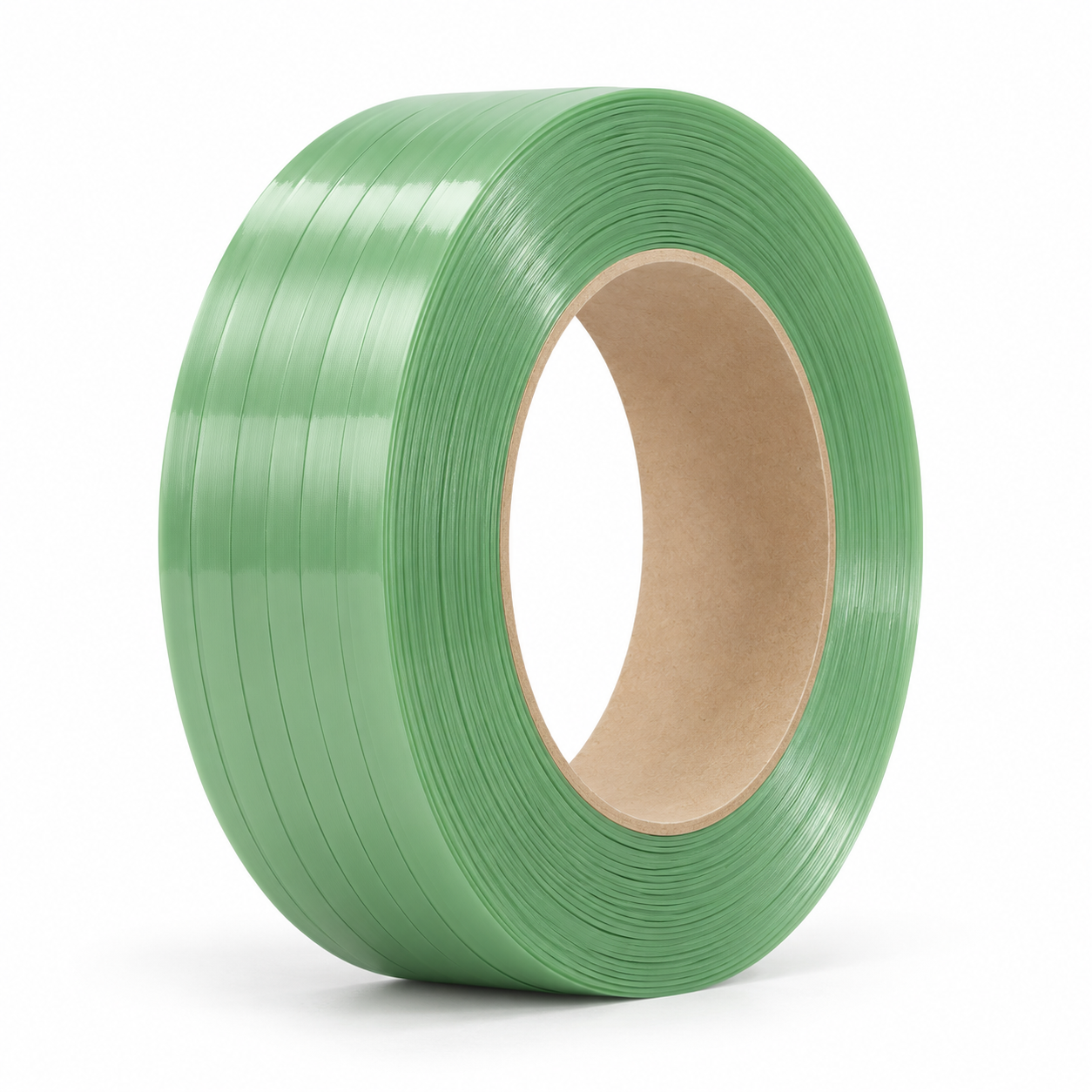
NewtonStrap Eco
Lightweight PET strapping developed with a focus on material efficiency.
- Material efficiency
- Weight-per-meter review
- Application-specific specifications

Explore Newton's industrial PET strapping range, designed around material efficiency, packaging equipment requirements and demanding industrial applications.
From lightweight solutions to heavy-duty packaging, Newton helps buyers define the right polyester strapping specification for their operations.

PET strapping is a polyester-based packaging material used to secure industrial loads during handling, storage and transportation. PET stands for polyethylene terephthalate, a type of polyester. Polyester strapping, polyester strap and polyester banding are common terms for this material. Polypropylene strapping, known as PP, is a different material and should be evaluated separately.
Industrial PET strapping is used as part of a load-securing system for bundles, bales, stacks and palletised goods. Selection starts with the package and its handling route, rather than the product name alone. Review strap dimensions, required breaking strength and elongation, surface finish, equipment compatibility and coil configuration together.
The proposed grade must suit the tensioning and joining process as well as the load. A sample trial and agreed acceptance criteria help connect the written specification to your packaging operations. Newton's product families provide starting points for that review; final suitability is confirmed for your application.

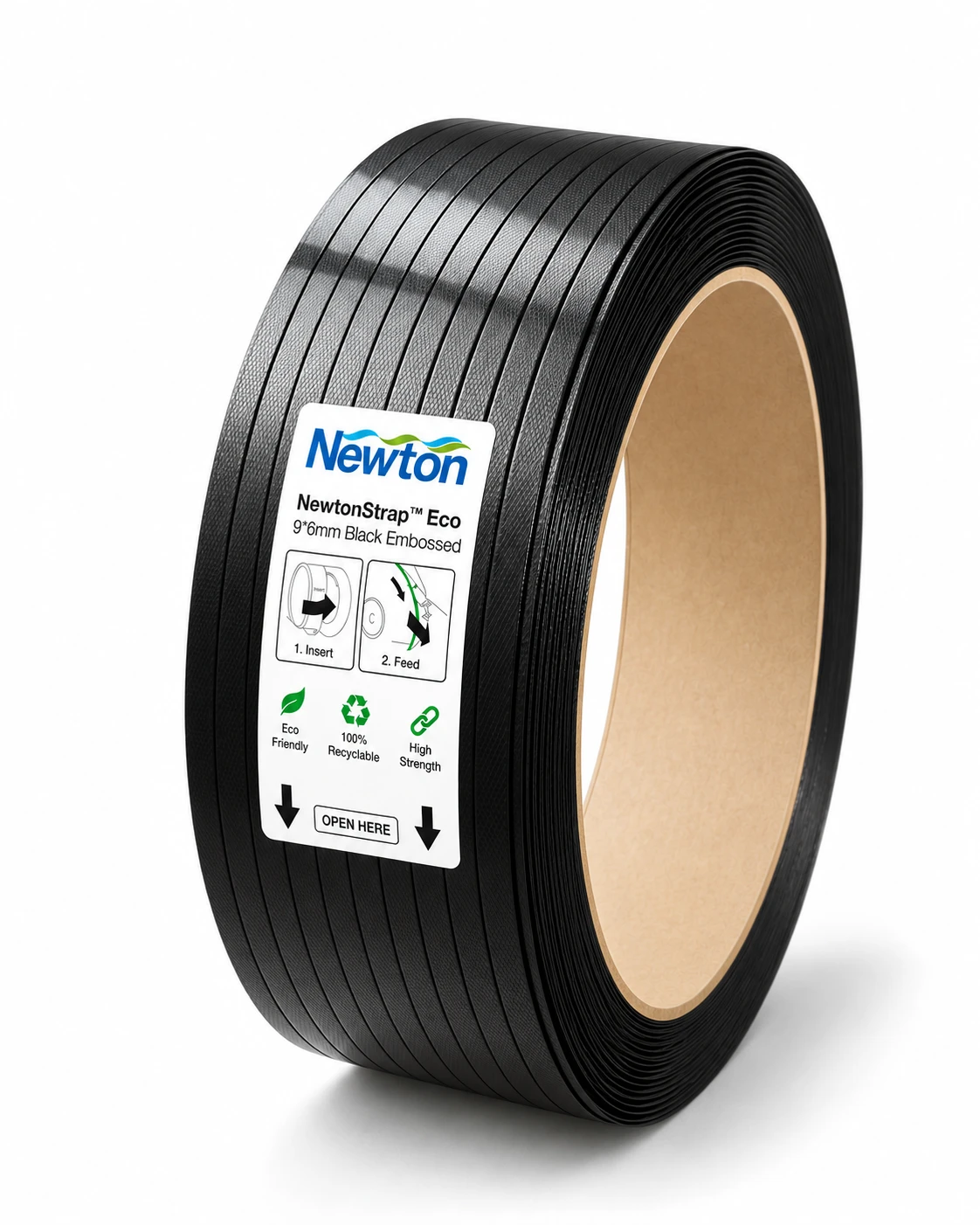
Lightweight PET strapping developed with a focus on material efficiency.

PET strapping with surface options for automatic strapping applications.
Illustrative coil; not a photograph of this exact series.

PET strapping for demanding heavy-duty industrial packaging applications.
Illustrative coil; not a photograph of this exact series.

PET strapping for demanding sealing and tear-strength requirements.
Illustrative coil; not a photograph of this exact series.
Product dimensions, performance values and availability are confirmed against your application.
| Product Series | Primary Focus | Application Considerations | Product Details |
|---|---|---|---|
| Eco | Material efficiency and weight per meter | Review material use alongside load requirements, dimensions and the proposed grade's performance. | View Eco |
| Plus | Surface options for automatic strapping | Confirm machine model, feed-system requirements, accepted strap dimensions and coil format. | View Plus |
| Ultra | Demanding heavy-duty packaging | Define load conditions, handling route and required strap and joint properties before selecting a grade. | View Ultra |
| Ultra Max | Demanding sealing and tear-strength requirements | Review the joining method and relevant test evidence, then validate the proposed grade in your application. | View Ultra Max |
Final strap selection depends on your load, equipment, dimensions and performance requirements.
Discuss Your ApplicationBring these requirements to your product review. Numerical values and available configurations are confirmed for the selected grade.
| Specification | Information to confirm |
|---|---|
| Material | Polyester (PET). PP is a separate strapping material. |
| Strap width | Available dimensions and tolerances confirmed against the selected grade and equipment. |
| Strap thickness | Available thickness and tolerance confirmed against the selected grade. |
| Breaking strength | Required minimum breaking load and supporting test information reviewed for the selected grade. |
| Elongation | Required elongation and test conditions confirmed against the selected grade. |
| Surface finish | Smooth or embossed options discussed against the grade and feed-system requirements. |
| Strap weight per meter | Measured weight per meter confirmed against the selected grade. |
| Coil dimensions | Coil format and dimensions reviewed against the dispenser and delivery requirements. |
| Core dimensions | Core interface confirmed against your equipment requirements. |
| Equipment compatibility | Machine or tool model, accepted strap dimensions, feed path and joining method reviewed; sample validation required. |
Newton China manufactures PET polyester strapping in the Eco, Plus, Ultra and Ultra Max families. Each family provides a starting point for discussing the product requirements of an industrial packaging application.
Buyers can review dimensions, required performance, surface and coil configuration with Newton. Ask which grade-specific documents are available and agree the sample evaluation needed for your package and equipment before approving a specification. For manufacturing technology and broader distributor or industrial supply discussions, explore Newton's company and capabilities information.
Explore the packaging requirements of your industry, then review the proposed grade and equipment together.
Review coil or bundle geometry, edges, surface protection and handling conditions when defining strap and joining requirements.
Explore SteelConsider bundle arrangement, contact points and the handling route. Connect the strap specification to the tensioning and joining process.
Explore Aluminum IngotsDiscuss module-pack configuration, pallet stability and protection of sensitive contact surfaces during handling and transport.
Explore Solar PVDefine bale dimensions, compression sequence and post-compression handling. Review the strap, joint and equipment as one packaging system.
Explore FiberReview bale or stack dimensions, contact surfaces and handling conditions, together with the equipment that applies the strap.
Explore PaperConsider product weight, pack geometry and edge protection. Agree the package and strap acceptance criteria before trials.
Explore ConcreteStart with pallet configuration, load stability and the distribution route. Include the current wrapping and strapping process in your brief.
Explore LogisticsReview pallet layout, fragile-pack protection and handling requirements. Confirm the strap's fit with the packaging line and contact surfaces.
Explore Bottles & JarsPET polyester strapping is a packaging strap made from polyethylene terephthalate, a type of polyester. It is used as part of an industrial load-securing system. Polyester strap and polyester banding are common alternative terms. PET differs from polypropylene (PP); material selection should reflect the package, equipment and required performance.
PET strapping is used to secure industrial bundles, bales, stacks and palletised loads during handling, storage and transportation. Applications can include fiber, paper, metal products and other packaged goods. The load geometry, contact surfaces, handling route and packaging process determine the requirements for the proposed grade and its joints.
Start with the load, package dimensions, handling conditions and the machine or tool that will apply the strap. Define strap width, thickness, required breaking load, elongation, surface and coil format. Compare the proposed grade's written specification and supporting evidence, then agree sample-trial acceptance criteria before approving it for your application.
PET strapping can be used with automatic machines designed to process PET, provided the selected grade matches the machine's requirements. Confirm the accepted width, thickness, surface, coil format and joining method with the equipment instructions. A trial on the actual line is needed to assess feeding, tensioning, joint quality and package performance.
PET strapping is made from polyethylene terephthalate, a polyester. PP strapping is made from polypropylene, a different polymer. They are not interchangeable simply because both are plastic straps. Compare the selected grade's properties, the equipment's accepted materials and dimensions, and the complete packaging requirements before considering a material change.
Compare Newton's PET strapping product families, then share the dimensions, equipment and purchasing requirements for your application.
Newton can review the proposed specification with your team.